Aboriginal Dreamtime Word Search
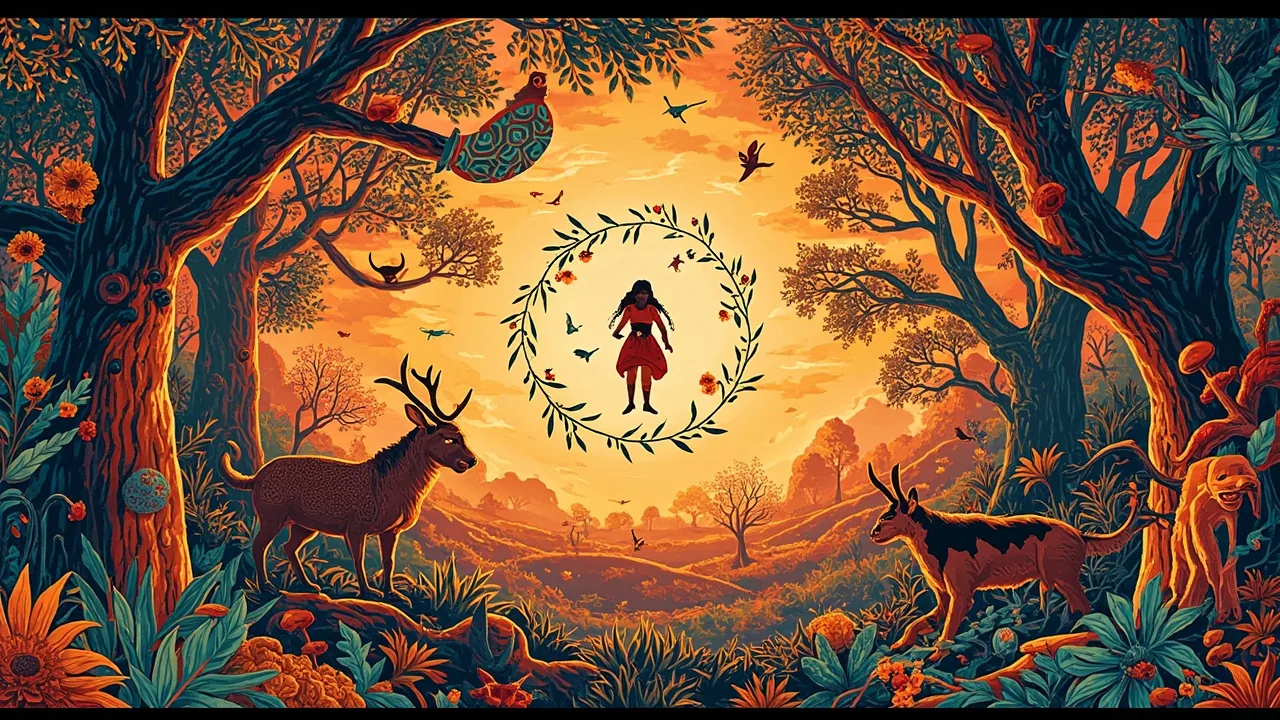
A free Aboriginal Dreamtime word search you can play straight in the browser. The 12-word list draws on the gods, heroes, and creatures of a mythology, hidden across a 15×15 grid in every direction. Drag through the letters to mark a word off.
Words to find: DREAMTIME, ANCESTOR, CREATOR, RAINBOW, SERPENT, TOTEM, BUSH, LAND, EARTH, WATER, FIRE, WIND.
Found words stay highlighted, so the grid gets easier to read as you go and the final few tend to fall quickly.
Aboriginal Dreamtime word list, defined
- ANCESTOR /ˈænˌsɛstər/ · noun
- A person from whom one is descended, typically one more remote than a grandparent; more broadly, an earlier form or precursor of something, such as a machine, idea, or language. Related: forebear, forefather, progenitor, predecessor.
- CREATOR /kriˈeɪtər/ · noun
- A person or thing that brings something into existence; someone who makes, originates, or produces something new. In religious contexts, it also denotes God as the maker of the universe. Related: maker, originator, inventor, author.
- RAINBOW /ˈreɪnbəʊ/ (British); /ˈreɪnboʊ/ (US) · noun
- A curved band of coloured light seen in the sky when sunlight is refracted and dispersed by raindrops. The word can also refer figuratively to a wide range, spectrum, or brightly coloured display. Related: arc, spectrum, bow, prismatic arc.
- SERPENT /ˈsɜːrpənt/ · noun
- A long, limbless reptile, especially a snake. Figuratively, a serpent is a treacherous or subtly dangerous person, and the word can also evoke a sinuous, twisting form. Related: snake, viper, python, snake-like creature.
- TOTEM /ˈtoʊ.təm/ · noun
- An object, animal, plant, or symbol regarded as representing a family, clan, community, or other group, especially in the traditions of Indigenous peoples of North America. In contemporary figurative use, it can refer to an emblem or characteristic feature of a group or organization. Related: emblem, symbol, mascot, sigil.
- BUSH /bʊʃ/ · noun
- A low woody plant with several stems arising from or near the ground; also used more broadly to mean an uncultivated area of wild or sparsely settled country, especially in Australia and southern Africa. Related: shrub, hedge, thicket, bramble.
- LAND /lænd/ · noun, verb
- As a noun, land means the solid ground or part of the earth's surface, as distinct from water; it can also mean a territory, country, or property consisting of land. As a verb, it means to come down onto the ground, especially from an aircraft or boat, and can also mean to arrive at a place or reach a final position. Related: territory, country, ground, soil.
- EARTH /ɜːrθ/ · noun
- The planet on which we live, the third from the sun; also the substance of the ground — soil and land as opposed to sea or sky. Related: ground, soil, land, dirt.
- WATER /ˈwɔːtə(r)/ · noun, verb
- Water is a transparent, odourless, tasteless liquid composed of two hydrogen atoms and one oxygen atom. As a countable noun, it can also refer to a body or expanse of water, such as a lake, river, or the sea. Related: liquid, H₂O, aqua, irrigate.
- FIRE /ˈfaɪər/ · noun
- The phenomenon of combustion, in which material burns and produces flame, heat, and light; also, an instance of burning that destroys or damages something. Related: blaze, flames, inferno, combustion.
- WIND /wɪnd/ · noun, verb
- As a noun, wind is the natural movement of air, usually caused by differences in atmospheric pressure. As a verb, wind means to twist or coil something, especially around a core or spindle; it also appears in the phrasal verbs wind up and wind down. Related: breeze, gust, current, blast.
Play the Aboriginal Dreamtime word search · Browse every myth · Today's daily challenge