Spinosaurus Word Search
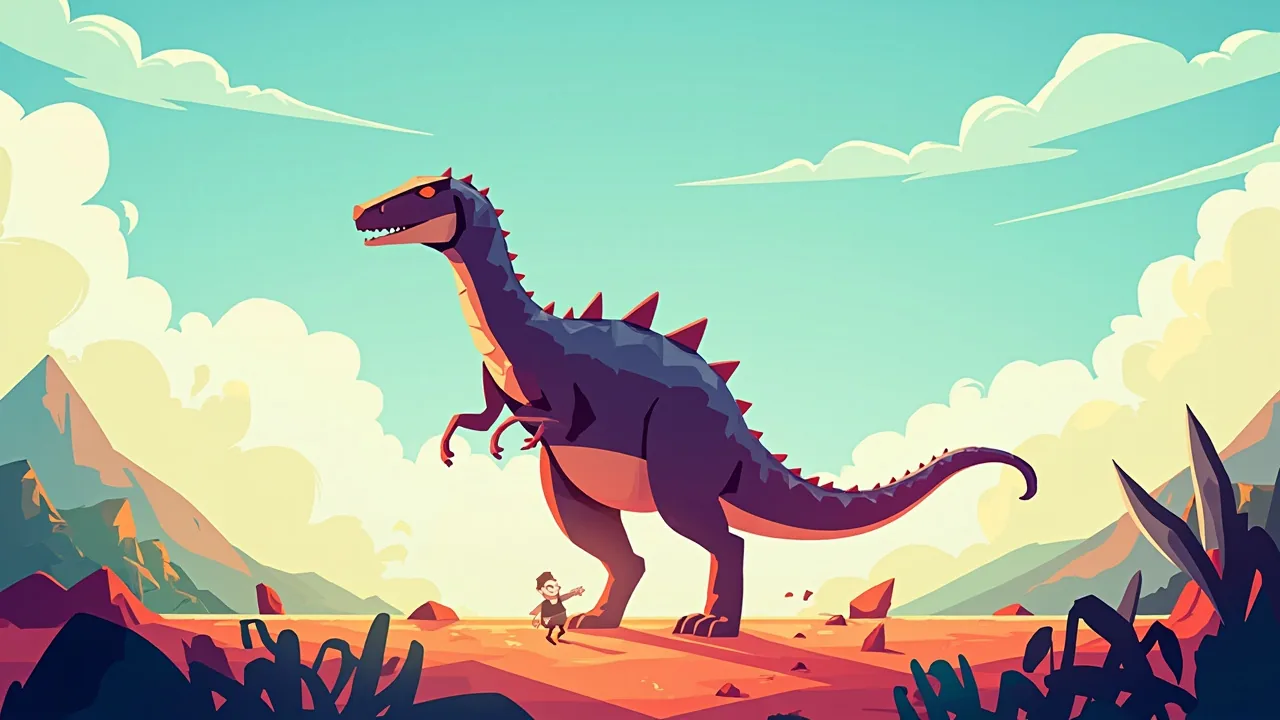
A free Spinosaurus word search you can play straight in the browser. The 12-word list draws on the habitats, species, and behaviors of an animal group, hidden across a 15×15 grid in every direction. Drag through the letters to mark a word off.
Words to find: SPINE, SAIL, TAIL, SKULL, SNOUT, TEETH, CLAW, FORELIMB, HINDLIMB, HIPS, RIVER, MARSH.
Every word on the list appears exactly once. Words can run forwards or backwards, so scan both directions before you move on.
Spinosaurus word list, defined
General dictionary meanings, not specific to this puzzle's theme.
- SPINE /spaɪn/ · noun; verb
- The spine is the flexible column of vertebrae that supports the body, protects the spinal cord, and connects the skull with the pelvis. It can also mean a sharp or rigid projection, a narrow ridge, or the central supporting part of a group, institution, or system. Related: backbone, vertebral column, backbone of an organization, central support.
- SAIL /seɪl/ · noun and verb
- As a noun, a sail is a sheet of strong fabric or other material attached to a mast or boom to catch the wind and propel a boat. As a verb, to sail means to travel across water in a boat, or figuratively to move smoothly or confidently through the air or a situation. Related: canvas, rigging, voyage, cruise.
- TAIL /teɪl/ · noun and verb
- A tail is the projecting appendage at the rear of many animals. By extension, it means the final part of something, such as a queue, process, or piece of text; as a verb, it means to follow someone closely. Related: rear, rump, posterior, back end.
- SKULL /ˈskʌl/ · noun
- The hard, bony structure that surrounds and protects the brain. By extension, it can mean the head or, figuratively, a person's mind or intelligence. Related: cranium, braincase, head, mind.
- SNOUT /snaʊt/ · noun
- The forward-projecting muzzle of an animal, especially one with a prominent nose, such as a pig or dog. By extension, the word can refer disparagingly to a person's nose or face and, in British informal use, to a police informer. Related: muzzle, nose, proboscis, nostrils.
- TEETH /tiːθ/ · noun
- Teeth is the plural form of tooth, referring to the hard structures in the mouths of humans and other animals used for biting, chewing, and related functions. By extension, it can refer to the pointed projections of combs, saws, gears, and similar objects. Related: dentition, choppers.
- CLAW /klɔː/ · noun, verb
- A claw is a curved, pointed nail on the toe of an animal such as a cat, bird, or crab, used for gripping, climbing, or tearing. As a verb, it means to scratch or tear at something with claws or fingernails. Related: talon, nail, unguis, pincer.
- FORELIMB /ˈfɔːrlɪm/ · noun
- A forelimb is either of the two front limbs of a quadruped vertebrate, such as a leg or arm at the front of the body. In anatomy and zoology it refers specifically to the anterior paired appendage, homologous to the human arm. Related: front leg, foreleg, anterior limb, thoracic limb.
- HIPS /hɪps/ · noun
- The bony structures forming the base of the spine in humans and some other animals, or the part of the body where the legs join the trunk. The hips are also a part of a vehicle, such as a car or a bicycle, that connects the wheels to the frame. Related: loins, flanks, rump, pelvis.
- RIVER /ˈrɪvər/ · noun and verb
- A river is a large natural stream of water flowing through a defined channel toward a sea, lake, or another body of water. The word can also describe a continuous flow or abundance of something. Related: stream, watercourse, waterway, brook.
- MARSH /mɑːʃ/ · noun
- An area of low-lying land that is seasonally or permanently covered with water and typically contains marsh vegetation. The word can also refer more broadly to wetland or an area of wet, soft ground. Related: wetland, swamp, fen, bog.
Play the Spinosaurus word search · Browse every animal group · Today's daily challenge