Porcupine Word Search
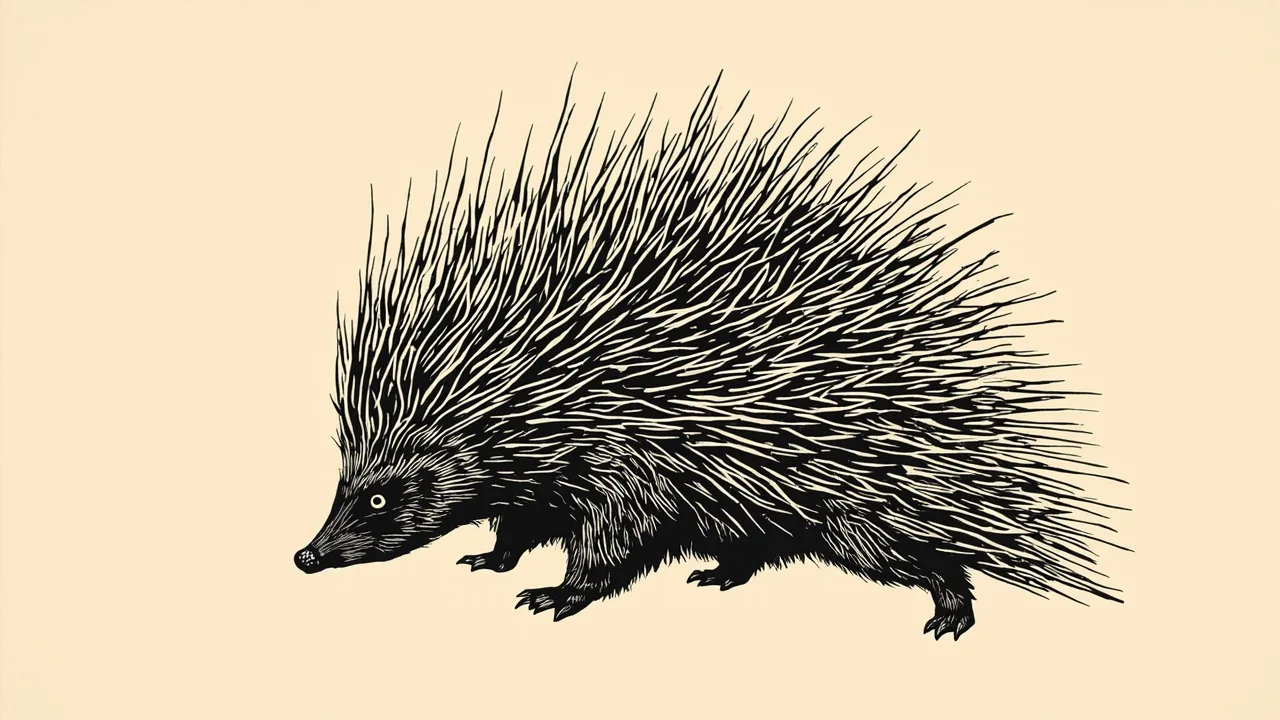
Play a Porcupine word search free online. We built the 12-word list around the habitats, species, and behaviors of an animal group, then scattered it across a 15×15 grid — horizontal, vertical and diagonal. Find them all to clear the board.
Words to find: QUILLS, SPINES, PAWS, TAIL, EARS, NOSE, FOREST, WOODLAND, UNDERSTORY, THICKET, BARK, LEAVES.
Words run in any of eight directions, backwards included — if one refuses to turn up, try reading the grid right to left.
Porcupine word list, defined
- QUILLS /kwɪlz/ · noun
- A quill is a type of bird feather pen used for writing, typically made from a bird's wing or tail feather. Quills were commonly used before the invention of metal nib pens. Related: feather pen, bird pen, calligraphy pen, dip pen.
- SPINES /spaɪnz/ · noun
- The hard, bony structures extending from the back of an animal, typically supporting a series of vertebrae. The hard, protective outer layer of a book, typically made of cardboard or plastic. Related: backs, ribs, thoraxes, scales.
- PAWS /pɔːz/ · noun
- The foot of an animal, especially a mammal, typically having claws. A paw can also refer to a mark or impression made by an animal's foot. Related: feet, claws, hooves, pads.
- TAIL /tɛɪl/ · noun, verb
- The back part of an animal's body, typically extending from the hips to the end of the spine. To follow or come after something. Related: rear, hindquarters, aft, end.
- EARS /ɪərz/ (British), /ɪrz/ (US) · noun
- Ears is the plural of 'ear', referring either to the organ of hearing on each side of the head, or to the seed-bearing head of a cereal plant such as wheat, barley, or corn. Related: auricles, organs of hearing, spikes, heads.
- NOSE /nɒz/ · noun, verb
- The nose is the part of the face that contains the nostrils and is responsible for smelling. As a verb, to nose means to push or move something with the nose, often in a gentle or tentative manner. Related: snout, beak, proboscis.
- FOREST /ˈfɒrɪst/ (UK), /ˈfɔːrɪst/ (US) · noun
- A large area of land covered with trees and undergrowth, especially one thick enough to form an ecosystem of its own; also, historically in Britain, land reserved for royal hunting. Related: woods, woodland, timberland, grove.
- WOODLAND /ˈwʊdlənd/ · noun
- A region of land covered with trees and underbrush, typically with a more or less closed canopy of branches overhead. A wooded area, especially one that is managed for timber or recreation. Related: forest, wood, grove, thicket.
- UNDERSTORY /ˈʌndərstoʊri/ · noun
- The layer of vegetation growing beneath a forest canopy, typically consisting of shrubs, saplings, and herbaceous plants. Related: subcanopy, undergrowth, underbrush, thicket.
- THICKET /θɪkt/ · noun
- A dense growth of shrubs and small trees, typically forming a tangled mass. A thicket may be a natural or cultivated feature, and can provide shelter and habitat for wildlife. Related: bush, bramble, thorn, shrub.
- BARK /bɑːrk/ · noun
- The tough outer covering of the trunk and branches of a tree or woody plant; also the sharp, harsh sound made by a dog. Related: rind, husk, hide, skin.
- LEAVES /liːvz/ · noun, verb
- The parts of a plant that grow from the stem and are typically green and flat. To leave or depart from a place. Related: flees, exits, departs, withdrew.
Play the Porcupine word search · Browse every animal group · Today's daily challenge