Giganotosaurus Word Search
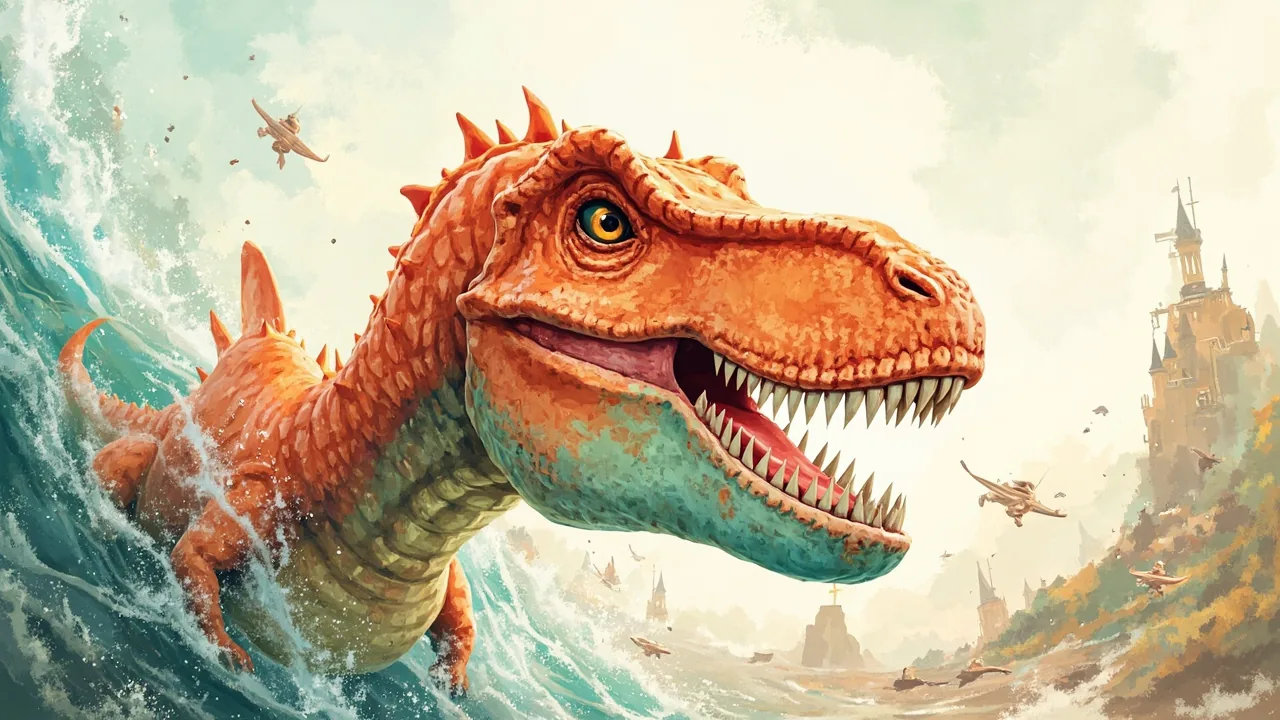
Free Giganotosaurus word search. We picked 12 themed words — the habitats, species, and behaviors of an animal group — and laid them out on a 15×15 grid. Drag across the letters to find every word on the list.
Words to find: SKULL, TEETH, TAIL, CLAW, RIBS, FOREST, PLAINS, WETLAND, RIVER, CARNIVORE, PREDATOR, HUNTER.
Every word on the list appears exactly once. Words can run forwards or backwards, so scan both directions before you move on.
Giganotosaurus word list, defined
General dictionary meanings, not specific to this puzzle's theme.
- SKULL /ˈskʌl/ · noun
- The hard, bony structure that surrounds and protects the brain. By extension, it can mean the head or, figuratively, a person's mind or intelligence. Related: cranium, braincase, head, mind.
- TEETH /tiːθ/ · noun
- Teeth is the plural form of tooth, referring to the hard structures in the mouths of humans and other animals used for biting, chewing, and related functions. By extension, it can refer to the pointed projections of combs, saws, gears, and similar objects. Related: dentition, choppers.
- TAIL /teɪl/ · noun and verb
- A tail is the projecting appendage at the rear of many animals. By extension, it means the final part of something, such as a queue, process, or piece of text; as a verb, it means to follow someone closely. Related: rear, rump, posterior, back end.
- CLAW /klɔː/ · noun, verb
- A claw is a curved, pointed nail on the toe of an animal such as a cat, bird, or crab, used for gripping, climbing, or tearing. As a verb, it means to scratch or tear at something with claws or fingernails. Related: talon, nail, unguis, pincer.
- RIBS /rɪbz/ · noun
- The curved bony structures forming the sides of the chest, or a cut of meat from this area. In anatomy, the ribs are long, curved bones that form the sides of the chest. Related: costal cartilages, breastbone, sternum, collarbone.
- FOREST /ˈfɒrɪst/ (UK), /ˈfɔːrɪst/ (US) · noun
- A large area of land covered with trees and undergrowth, especially one thick enough to form an ecosystem of its own; also, historically in Britain, land reserved for royal hunting. Related: woods, woodland, timberland, grove.
- PLAINS /pleɪnz/ · noun
- Extensive, level or nearly level open land, especially grassland. “Plains” is also the regular plural of “plain.” Related: prairies, grasslands, steppes, lowlands.
- WETLAND /ˈwɛtlænd/ · noun
- An area of land that is regularly saturated with water, either permanently or seasonally. Wetlands may be fresh or salt water and can include marshes, swamps, fens, and tidal flats. Related: marsh, swamp, marshland, fen.
- RIVER /ˈrɪvər/ · noun and verb
- A river is a large natural stream of water flowing through a defined channel toward a sea, lake, or another body of water. The word can also describe a continuous flow or abundance of something. Related: stream, watercourse, waterway, brook.
- CARNIVORE /ˈkɑːrnɪvɔːr/ · noun
- An animal that feeds primarily on the flesh of other animals. More broadly, a person who eats meat, or an organism that obtains energy and nutrients from animal tissue. Related: predator, meat-eater, hunter, flesh-eater.
- PREDATOR /ˈprɛdətər/ · noun
- An animal that hunts, kills, and feeds on other animals or their remains. By extension, a person or organization that exploits, victimizes, or preys on others. Related: hunter, carnivore, pursuer, stalker.
- HUNTER /ˈhʌntər/ · noun; verb
- A hunter is a person who hunts wild animals for sport, food, or control of harmful species. As a verb, to hunt means to search for or pursue a person, animal, or thing. Related: seeker, pursuer, trapper, stalker.
Play the Giganotosaurus word search · Browse every animal group · Today's daily challenge