Chameleon Word Search
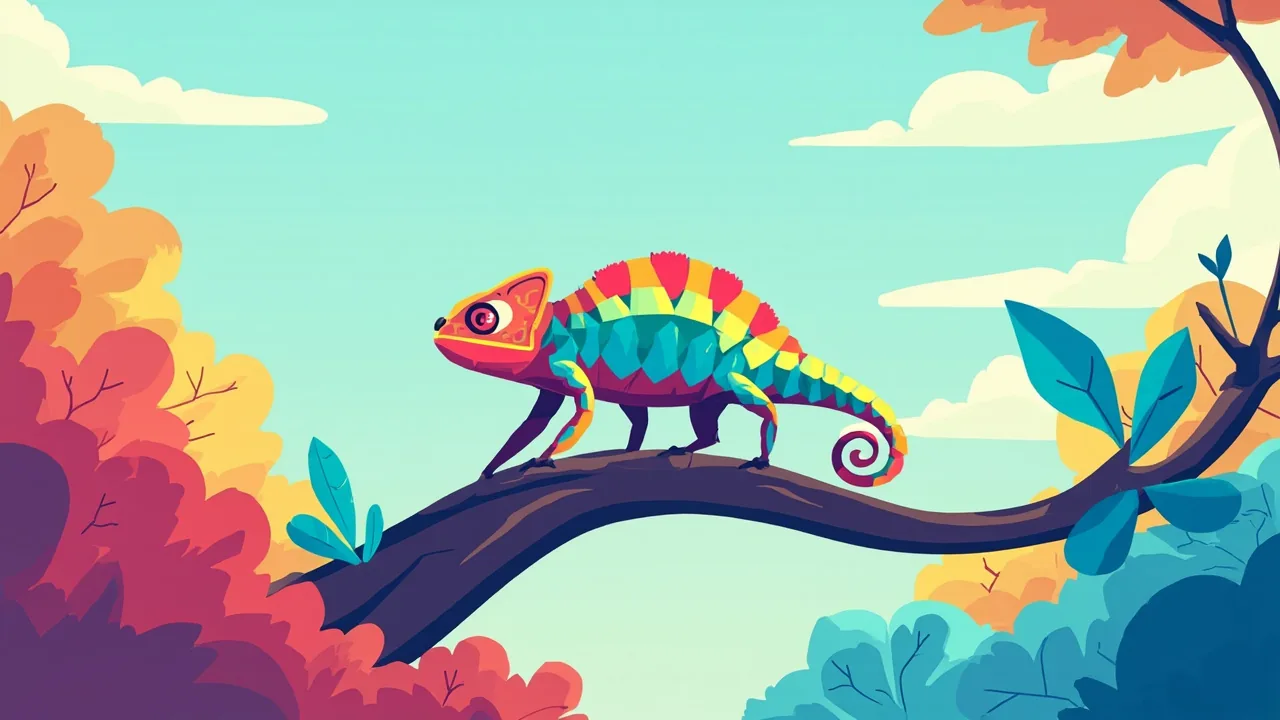
This Chameleon word search hides 12 words on a 15×15 grid — the habitats, species, and behaviors of an animal group. Trace each one with a finger or mouse and it locks in as soon as the whole word is covered. No signup, no download.
Words to find: TONGUE, EYES, CREST, SPINE, TAIL, RAINFOREST, JUNGLE, SAVANNA, TROPICS, WOODLAND, INSECTS, CRICKETS.
Words run in any of eight directions, backwards included — if one refuses to turn up, try reading the grid right to left.
Chameleon word list, defined
General dictionary meanings, not specific to this puzzle's theme.
- TONGUE /tʌŋ/ · noun
- The muscular organ in the mouth, used in tasting, chewing, and speech. By extension, a tongue can mean a person's language or speech, or a projecting part of an object such as a shoe or musical instrument. Related: language, speech, dialect, vernacular.
- EYES /aɪz/ · noun
- The plural of "eye": the paired organs of sight in humans and animals, or the individual organs regarded collectively. It is also used figuratively to mean a person's attention, judgment, or way of seeing something. Related: sight, vision, gaze, view.
- CREST /krɛst/ · noun
- The highest part or point of something, such as the top of a hill, wave, or roof; also a distinctive emblem or device displayed on a coat of arms or helmet. Related: peak, summit, apex, top.
- SPINE /spaɪn/ · noun; verb
- The spine is the flexible column of vertebrae that supports the body, protects the spinal cord, and connects the skull with the pelvis. It can also mean a sharp or rigid projection, a narrow ridge, or the central supporting part of a group, institution, or system. Related: backbone, vertebral column, backbone of an organization, central support.
- TAIL /teɪl/ · noun and verb
- A tail is the projecting appendage at the rear of many animals. By extension, it means the final part of something, such as a queue, process, or piece of text; as a verb, it means to follow someone closely. Related: rear, rump, posterior, back end.
- RAINFOREST /ˈreɪnˌfɒrɪst/ · noun
- A dense forest in a region with high rainfall, characterized by lush vegetation, a layered plant structure, and exceptional biodiversity. The term can also refer more broadly to a tropical or subtropical forest with substantial year-round rainfall. Related: wet forest, tropical forest, jungle.
- JUNGLE /ˈdʒʌŋɡəl/ · noun
- A dense, tangled area of vegetation, especially one in a tropical or subtropical region. By extension, it can refer to a complicated or confusing situation in which it is difficult to make progress. Related: rainforest, forest, wilderness, thicket.
- SAVANNA /səˈvænə/ · noun
- A wide, generally treeless grassland, especially one occurring in tropical or subtropical regions. The term may also denote the biome more broadly, including its grasses, scattered trees, and associated wildlife. Related: grassland, plain, prairie, steppe.
- TROPICS /ˈtrɒpɪks/ (British); /ˈtroʊpɪks/ (American) · noun
- The regions of Earth between the Equator and either the Tropic of Cancer or the Tropic of Capricorn; collectively, the equatorial region in which the Sun is directly overhead at some time during the year. Related: tropical regions, torrid zone, equatorial belt.
- WOODLAND /ˈwʊdlənd/ · noun; also adjective
- Land covered with trees, especially a relatively natural area of woodland. As an adjective, it means relating to or consisting of woodland. Related: forest, woods, wooded land, woodland area.
- INSECTS /ˈɪnsɛkts/ · noun
- Insects are arthropods characterized by a segmented body, six legs, and usually wings in the adult stage. The term includes animals such as butterflies, beetles, flies, ants, bees, and dragonflies. Related: bugs, creepy-crawlies.
Play the Chameleon word search · Browse every animal group · Today's daily challenge